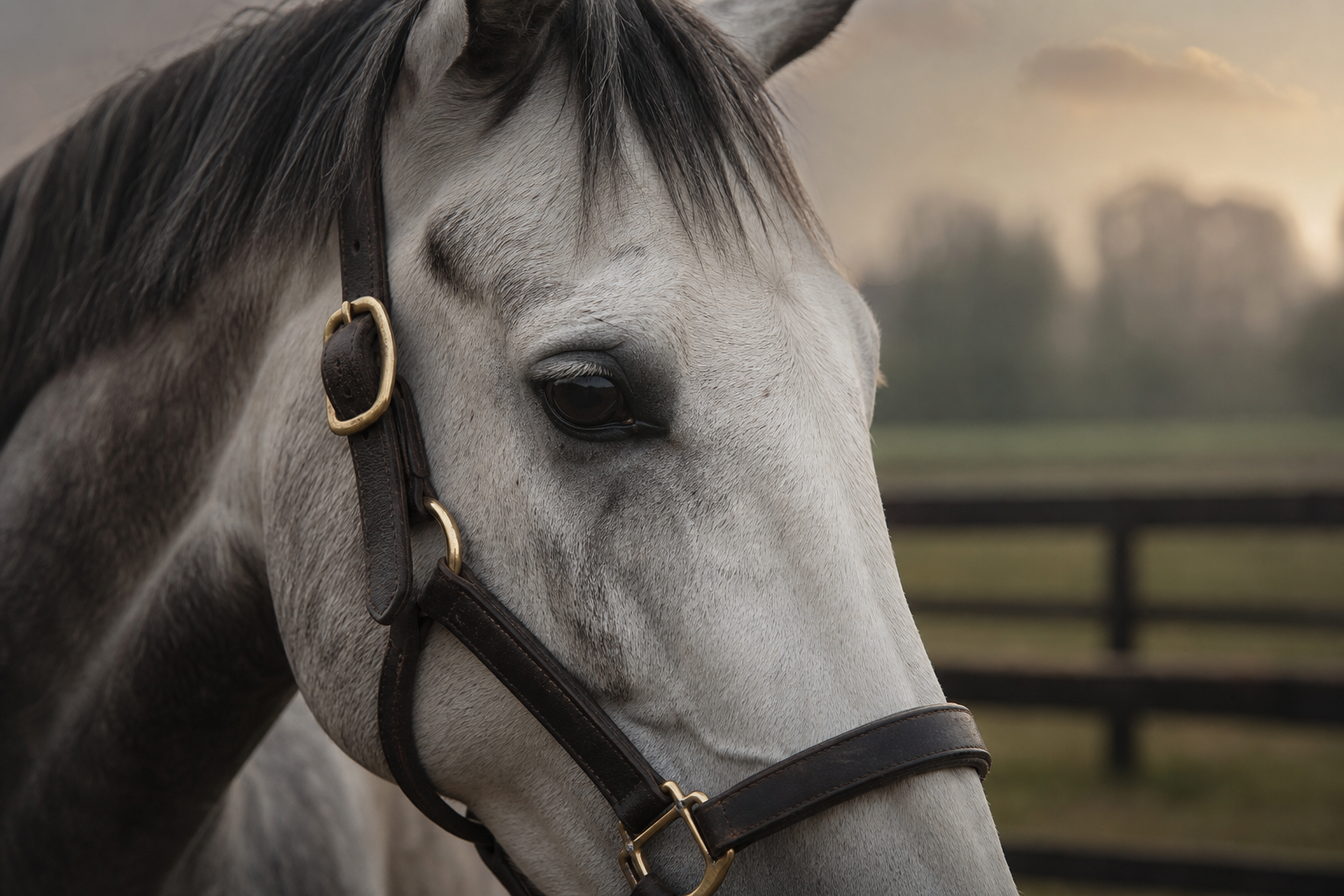
Horses communicate constantly. The problem is that most of what they say is said without sound, and it happens faster than most riders are trained to notice. An ear rotation, a shift of weight, a change in how the tail is carried — each of these is a statement. Learning to read them is not a luxury for advanced riders; it is foundational to safe and productive horsemanship.
The good news is that equine body language is not especially complex. Horses use a relatively small vocabulary of signals, and those signals are consistent across individuals and breeds. Once you understand the grammar, individual horses become legible.
The ears
The ears are the most watched part of a horse's body, and rightly so. They are independently mobile, rotating nearly 180 degrees, and they point in the direction of the horse's attention. A horse with both ears pricked forward is alert and focused on something ahead. A horse with one ear forward and one back is dividing its attention — likely listening to the rider while also monitoring something outside the arena.
Ears laid flat back and pressed tight to the skull are an unambiguous warning. This position signals aggression, pain, or extreme irritation. A horse pinning its ears while you approach is not being difficult; it is communicating clearly that something is wrong. The cause might be discomfort from tack, social tension from another horse nearby, or pain from a health issue — all worth investigating before proceeding.
Soft, slightly drooped ears suggest relaxation or tiredness. Rapidly swivelling ears in a horse that is otherwise still indicate anxiety and heightened attention — the horse is trying to locate or identify something it finds concerning.
Eyes, nostrils, and muzzle
A soft eye — relaxed muscles around the socket, slightly hooded lid — indicates a calm and comfortable horse. A hard eye, with the whites visible and the musculature tight around the socket, indicates stress, fear, or pain. The degree to which the white of the eye shows is often a good rough measure of a horse's arousal state.
The nostrils give information about both physiological state and mood. Flared nostrils accompany exertion, arousal, and fear. Tight, wrinkled nostrils often indicate tension or discomfort. Relaxed, soft nostrils are a reliable sign of a horse at ease. The muzzle as a whole — including the lips and chin — tightens visibly under stress and softens with relaxation. A horse chewing, licking its lips, or yawning after a period of tension is typically releasing that tension and returning to a calmer state.
Body posture and weight
How a horse carries its weight tells you a great deal about its state of mind and physical comfort. A horse standing square and alert, weight distributed evenly, is neutral and attentive. A horse resting a hind leg casually, with lowered head, is relaxed and not particularly concerned with its environment.
Weight shifted forward or a braced posture often precedes movement — it is a preparatory signal worth recognising, particularly when approaching a horse that you intend to catch or handle. A horse that swings its quarters toward you as you approach is not being careless; it may be warning you or preparing to kick. Moving to the horse's shoulder rather than approaching straight at the hindquarters is the appropriate response.
Tension through the topline — the muscles running from poll to tail — is a consistent indicator of stress. A hollow back, raised head, and stiff neck in a horse being ridden suggests physical discomfort, anxiety, or both. The horse that moves freely through its back with a lowered, swinging neck is comfortable and forward.
The tail
Tail carriage is partly conformation and partly communication. A tail clamped down hard between the hindquarters is a fear or pain signal. A tail that swishes rhythmically and vigorously while being ridden — particularly in time with leg aids — is the horse saying it finds the aid unpleasant or excessive. An occasional swish at a fly is noise; repeated lateral swishing during work is signal.
A high, flagging tail indicates excitement or arousal — common in horses that are worked up before competing or that have spotted something alarming. Whether this is concerning depends heavily on the breed and individual. Some breeds carry their tails very high naturally when moving. The key is deviation from the individual horse's baseline, not comparison to a universal standard.
Reading the whole horse
The mistake most beginners make is reading signals in isolation. A single ear back means little on its own; a horse with pinned ears, a wrinkled muzzle, a tense topline, and tight nostrils is communicating loudly and consistently. Body language should be read as a whole picture, with each signal contextualised by the others and by what is happening in the horse's environment.
The practical implication of this is to slow down when handling horses. Most accidents with horses happen when humans move faster than the horse can track or respond to, and when humans fail to read warning signals before they escalate. World Horse Welfare has documented extensively that the majority of horse-related injuries involve a failure to recognise early warning signals — not a sudden unprovoked attack. Horses almost always communicate before they act.
The time investment required to learn equine body language is modest. Most riders who spend consistent time with horses develop a functional working understanding within months, often without consciously studying it. What structured study adds is the ability to read horses you do not know, to catch subtler signals earlier, and to understand why certain horses behave in ways that initially seem unpredictable. The horse is always making sense. The gap is usually in the reading.
Written by
Anna Röst
Equestrian writer focused on northern breeds and riding culture.